
The Royal Air Force at Omaha Beach

Photographic Credit – US National Archives
Why was there a small contingent of RAF Technical personnel mixed up with over 130,000 highly trained combat troops attempting to land on Normandy beaches on D-Day?
Spare a thought this evening of the 5th June 2024 that 80 years ago, 7000 ships and landing craft manned by 195,000 naval personnel from 8 allied countries. Almost 133,000 troops from the USA, British Empire & their allies: were on the eve of what was to be the largest seaborne invasion in history, 6th June 1944. This historic date was to be the most momentous happening in modern history and was the beginning of the liberation of Europe from the tyranny of Nazi Germany.
Planning for the allied invasion of Europe finally got underway in May 1943 during an Anglo – American conference in Washington. Consideration was given to the opening of a front in Western Europe for offensive operations against German occupation. The planners selected 50 miles of coast in western Normandy. Five beaches were selected as invasion sites Juno, Gold, Utah, Sword & Omaha.
As detailed planning progressed it was strongly recommended to get Radar coverage for the Landing Beaches and once landing progressed to get further Radar units set up in Normandy, all of which were to provide vital protection from the Luftwaffe during the amphibious landings on exposed beaches.
Radar protection for the beaches was established by the conversion of 3 Landing Ships Tank (LST) into air surveillance & control ships designated as Fighter Direction Tenders (FDT); crewed by RAF technical personnel with the Navy providing the marine crew. The 3 FDTs were positioned & anchored at strategic locations off the Normandy coast & provided outstanding air coverage.


The following link provides an excellent Briefing Paper by the Association of RAF Fighter Control Officers. The D-Day Fighter Control Story, compiled & edited by Group Captain Tim Willbond RAF (Retd)
Further Radar protection was planned to be established inland of the Normandy landing beaches to provide air coverage further into Normandy as the allies progressed. To achieve this objective, RAF personnel were selected to form Mobile Radar Units & extensive training began from mid 1943 in Scotland which included practice landings from landing craft which operationally was usually associated with “front line infantry”. See the following link
https://www.therafatomahabeach.com/precis/
Further recommended reading on mobile GCI radar units is covered in a very informative book, Off to War with “054”, by Sqd Ldr John Kemp who was the second CO of GCI RAF Ripperston (the radar rooms)

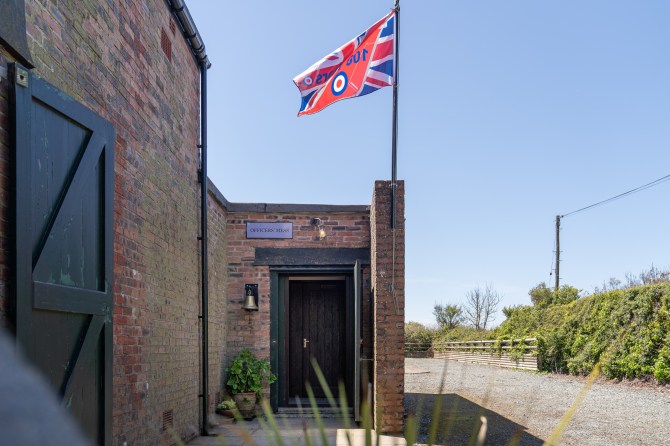
 THE RADAR ROOMS